December 31, 2025
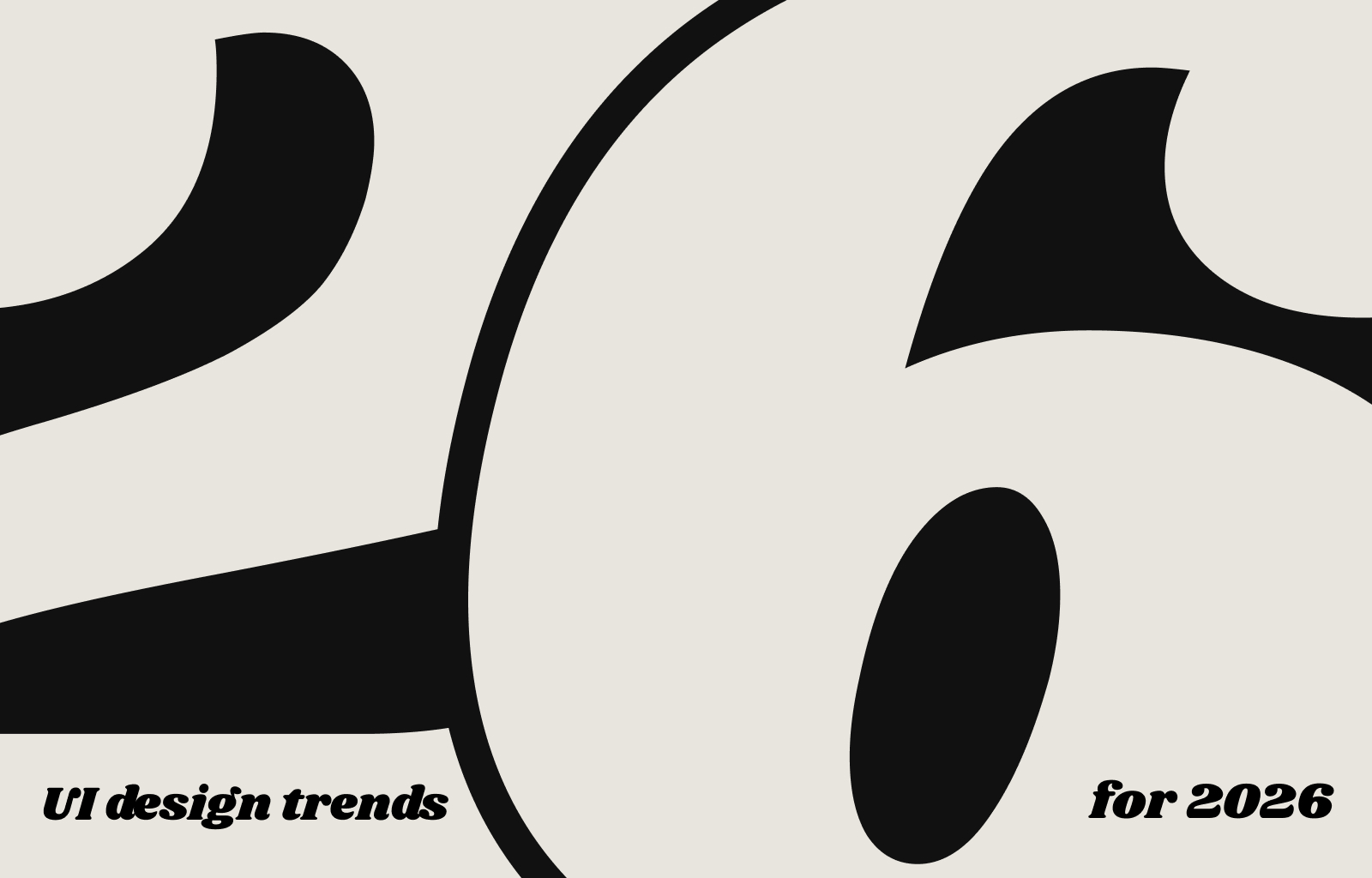
UI design trends for 2026
From AI to XR to vibe creation
Eugene,
UX/UI Designer
Instead of handing off fixed screens, designers will need to create constraints, safety rails, and evaluation criteria that guide how these model-driven interfaces behave.
As you may have noticed, we’ve seen a wave of new UX/UI design trends emerge—driven by the AI boom, rapid advances in mixed reality, unexpected updates to design tools, and shifting user expectations. These shifts aren’t just visual changes; they’re reshaping how interfaces feel, behave, and respond to users.
Let’s dive in.
Mixed Reality in the day-to-day
In October, we saw Mark Zuckerberg embarrass himself on stage when the demo of the RayBan Meta Display glasses backfired. However, the demo aside, this new device imploded the mixed reality trend. This launch helped other alternatives (which are cheaper) to get the limelight they needed.

Samsung Galaxy XR in action
This combined with the launch of Samsung’s Galaxy XR headset (which is half the price of Apple’s Vision Pro) really shows the amount of money that companies are pouring into this field. On the plus side, designers get better opportunities in the space of XR or MR design.

Meta Neural Band — Gestures
As a designer, it’s exciting to see new modes of interacting with the Meta Neural Band which allows you to control your device with unique gestures — pinch and twist to zoom, double tap your fingers to select, and more.
This also gives rise to a new type of interface design — VBIs, which is short for Vision Based Interfaces. This includes eye tracking, facial expression analysis, head movement tracking, gesture controls, and more. This means an almost hands free experience is viable in the future.

Learning how interface design can blend with real world experiences will be crucial since that is where the next tech is headed. We’re seeing more of these floating displays entering the real world, so learning this before they truly blow up will be the next step. Here’s a guide I found that might help you — Learn more
Voice based interface design
Voice has recently blown up in a major way with AI software using voice based interfaces and voice based interactions. So, instead of typing in, you are conversing with the software to ask for answers or request an on screen action.

Gemini Live — voice based interactions
A great example of this is Google Gemini’s live voice assistant which allows users to point their camera onto anything and ask questions based on this. Here computer vision is in full display with voice being that main mode of interaction. We see such an interaction in most major AI apps including ChatGPT, Claude, Perplexity and others following along.
We also see voice based interfaces playing a major role in wearable technologies, where typing or gestures become difficult to carry out. I’m sure you’ve seen people on their Apple watches or Android smart devices asking the device to do something through voice commands.

Apple Homepod
The same interaction carries over to smart home assistance (Alexa comes to mind), smart home devices, and even AI standalone gadgets.
The industry is catching up with voice technologies, and so are software companies creating new tools to make this happen. As designers you can try out Protopie’s voice prototyping features — Learn more
Glass is here to stay (other materials too)
I have Apple to blame for this. Ever since the launch of liquid glass with iOS 26 and its counterparts, every company has been following this trend. I believe it is due to its aesthetic appeal and interesting effect that this design trend has truly been hyped up.

Microsoft app icon update 2025
This trend has trickled down to other areas of design — graphics, visuals, iconography, etc. Microsoft’s new app icon designs are a major change to brand’s look. This implements 3D materials like glass, metal, and more.

The same goes for Apple’s new app icon update — more glassy and shiny than before, truly leaning into the liquid glass effect.
Such trends aregiven a boost if the software used to design them follow along. Figma launched a glass effect update that solidified that designers love using this effect. I’ve also observed major websites slowly implement glass style backgrounds, buttons, and cards.

Figma glass effect update
Motion takes a big leap
Motion design is more accessible and easy to implement today than ever before. With tools like LottieFiles Creator, LottieLabs and even Rive taking the front seat.
I recently spoke to someone from LottieFiles who showed me a mind blowing update. Lottie animations can now respond to user input and can have their own functionality! So if a user selects one option out of many, an animation can be played based on conditions, without any external code required. It’s called state machine, and you must try it out here.

LottieFiles state machines
At the same time, tools like LottieLabs have brought forth a Figma plugin that converts your UI elements into an animated Lottie sequence with AI — called Magic Animator.
We also see advance animations in tools like Rive, that allow non motion designers to create something unique with ease. Rive, just like LottieFiles, allows designers to add interactions without code. It’s simple to add hover or pressed animations which can be embedded or added to other no-code tools like Webflow or Framer.
War of the AI browsers
A lot of browser companies have shifted their focus towards AI based or agent based browsing, where the users ask the agent to find something or do a certain task, and the browser does it for them in real time.

ChatGPT Atlas browser
Now, why is the important for UX/UI designers? Designers used to focus on the business and users only, but with the rising era of AI agents and browsers, they will also have to focus on Agentic UX. This means that we will be creating experiences for AI systems and agents as well, looking at how these agents interact with websites and apps. Many different companies including Perplexity, OpenAI, The Browser Companies, and others.
Some companies might even ask designers to build unique experiences for AI platforms like ChatGPT or Gemini. A great example of this is Apps in Chatgpt, a major update to ChatGPT that allows third party companies to launch mini apps inside ChatGPT.

ChatGPT Apps
We now see AI trickling into all different facets of user experiences, hence designers with specialized skills will be more valuable for these companies.
Morphing is The New Scrolling
While cool scroll animations and parallax effects still blow me away. As a designer I’m always looking for the next thing. Recently, a lot of different mainstream websites are moving to a morphing effect between each section of their land page.
Case in point Meta Rayban website:

Scroll animations on Meta’s website
100% height on everything
The theme of most websites these days is immersive. We’re seeing more websites embrace full height images and videos, along with text placed at the top and bottom of each section to add to the immersion.

Apple Airpods website
ince the product or service is at the center of these websites, you will also observe bottom aligned titles and text based feature sections.

When I was starting out, designers tried to stuff in as much into one scroll as possible, however designers are become risk takers! The bottom aligned title or navigation used to be very “aesthetic” and niche, but it’s more common today.

This comes after years of data and research showing how immersive experiences and videos work better than static content, and designers have leaned into it for sure.
Custom cursors are back?
I remember a time when using custom cursors was considered a sin in the web design industry. This was due to some of these cursors being distracting and harmful to usability, they’ve recently made a solid comeback to landing pages.
From the iconic Figma cursors designed for collaboration and teams, to animated circular cursors, there are really no limits.

Custom cursor feature in Framer
Thanks to tools like Framer, cursors are now more than ways to navigate a website, but they can often display extra content like images or videos over hover and indicate what you’re interacting with. A great example of this is how cursors change to a play button when hovering over a playable video.
I would say these cursors are definitely reserved for more stylized or creativity first websites, as compared to more functional or more product focused websites.
The end of the dark pattern
Dark patterns have been a staple in the UX design field for years now. Marketers use it, UX and web designers use it, and businesses encourage it. However, there have been some major advancements in how users perceive dark patterns and how governments feel about it.
Recently the EU (European Union) banned and enforced certain rules on implementing dark patterns on your digital platform and it includes a lot of major and commonly used dark patterns.
Fake Urgency — Designers can no longer create false timers or elements for urgency to make users purchase faster. Major examples of this are “Only 2 seats remaining” or “12 hours left to buy”. The EU now says that unless the timer is real or shows a real urgency, you can not implement it.
Pre-Ticked Boxes — A lot of websites pre-check checkboxes in forms to make users sign up to a newsletter or opt-in to options they did not select on their own will. The are now, also banned.
Emotional CTA — This is a BIG one! Most Sass and agency websites implement emotional CTAs like “Failing to get leads, contact us” or “Struggling to make your sales deadline, join our bootcamp now”. According to the EU, these CTAs can toy with a user’s emotions or manipulate them into buying something.
This article does an amazing job detailing these laws and explaining them in its entirety. If your website is published in Europe, make sure you focus on these if you don’t want to be fined or get your website banned.
Vibe coding replaces complex prototyping
There are a bunch of tools like Protopie, Origami Studio and Proto IO that can add advance interactions and real user touchpoints to your prototypes.
However, AI stepped into this field with something I’m sure you’ve heard of — Vibe Coding. Now, even though the name has coding in it, it’s more of a no-code solution for designers and developers to build life like functional prototypes. That means instead of a “dummy” form, you can actually add areal working form that can take input from users; or instead of a just adding visual success animations you can also make the phone vibrate for like like app experiences.
For example Jacques Debeuneure Jr. made this amazing like clock and weather website which plays calming music using Figma Make:

Some major tools like Lovable, Bolt, Google AI Studio are at the center of the vibe coding revolution, with features that cater to designers like us. Some of them boast a Figma import feature and some of them have a live editable canvas to work with. Most companies like Figma or Framer who are playing it smart, are introducing their very own vibe coding platforms to work alongside their main apps.
However, AI stepped into this field with something I’m sure you’ve heard of — Vibe Coding. Now, even though the name has coding in it, it’s more of a no-code solution for designers and developers to build life like functional prototypes. That means instead of a “dummy” form, you can actually add areal working form that can take input from users; or instead of a just adding visual success animations you can also make the phone vibrate for like like app experiences.
Here is a very useful guide on vibe coding if you’re looking to get started: Learn more
Variable fonts got a new personality
Earlier we used to utilize variable fonts in a more systematic or simple manner, now designers are going all ballistic with them.

Mix these variable fonts and font styles with shapes, animations and SVGs and you have a very interesting and fun Hero section that users and clients love.
Here are some interesting examples:

Hero section of Jitter.video

Title of webdesignerdepot.com